Chili’s Allergen Menu (2026 Complete Allergy Guide)
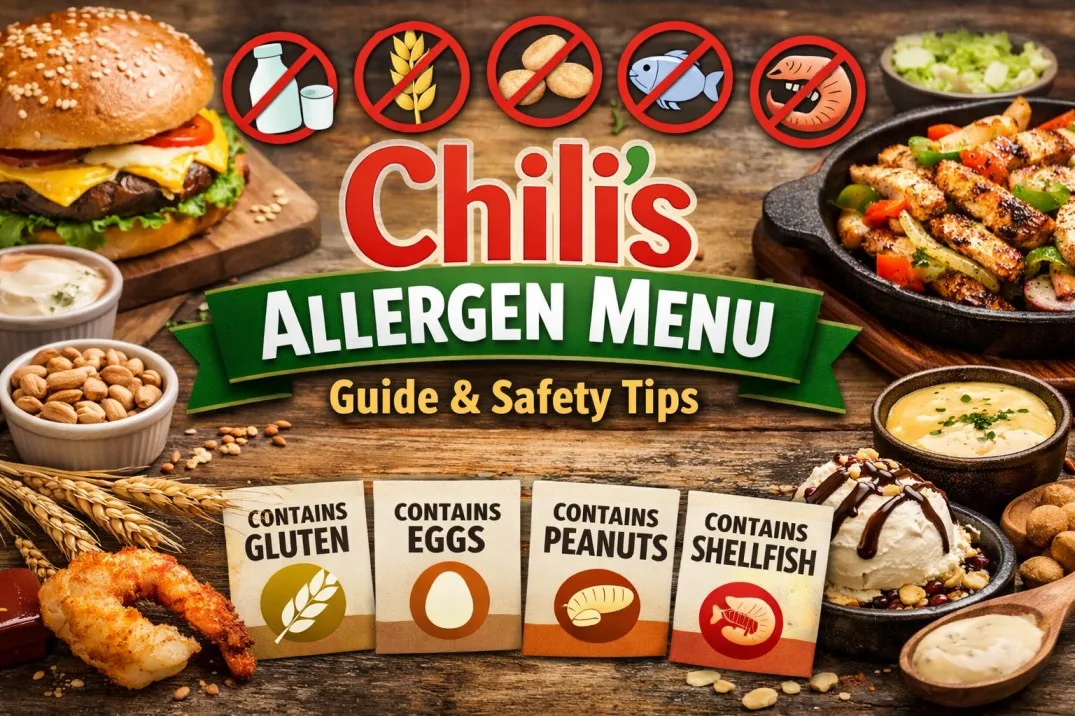
The Chili’s allergen menu provides detailed information about the presence of common food allergens across the restaurant’s full menu. It identifies ingredients related to major allergens such as milk, eggs, wheat (gluten), soy, peanuts, tree nuts, fish, shellfish, and sesame, helping guests review potential risks before ordering.
At Chili’s, allergen transparency is supported through a structured ingredient matrix that covers appetizers, burgers, fajitas, salads, desserts, sauces, and kids’ meals. This allows customers to evaluate dishes by category rather than relying on assumptions.
Because Chili’s kitchens operate with shared grills, fryers, and preparation areas, cross-contact between allergens is possible. Ingredient sourcing and preparation methods may also vary by location. For that reason, reviewing the allergen guide and confirming details with staff is essential for anyone with food allergies or medically restricted diets.
This guide breaks down Chili’s allergen information by major allergen and by menu category, so you can make safer, informed dining decisions.
Major Allergens Listed on the Chili’s Menu
The Chili’s allergen menu identifies the most common food allergens across its menu. These allergens appear in sauces, marinades, breaded items, dairy-based toppings, and desserts. Because many dishes contain multiple components, reviewing allergen presence by category is important.
Below is a structured overview of the primary allergens and where they are most commonly found.
| Allergen | Commonly Found In | Cross-Contact Risk | Important Notes |
|---|---|---|---|
| Milk | Queso, cheese toppings, creamy dressings, desserts | High | Present in many sauces and toppings |
| Eggs | Ranch dressing, certain sauces, batters | Moderate | Often hidden in dressings |
| Wheat (Gluten) | Burger buns, tortillas, fried items, pasta | High | Shared fryer risk for breaded foods |
| Soy | Marinades, seasoning blends, sauces | Moderate | Common in flavor bases |
| Peanuts | Select desserts | Low | Always confirm ingredients |
| Tree Nuts | Some desserts | Moderate | Location dependent |
| Fish | Seafood dishes, some sauces | Moderate | Cross-contact possible |
| Shellfish | Shrimp-based items | Moderate | Shared kitchen risk |
| Sesame | Certain dressings or specialty items | Low | Confirm if sensitive |
Important Considerations
- Allergen exposure can occur through shared cooking surfaces.
- Ingredient formulations may change periodically.
- Some allergens may be present in small amounts within sauces or seasoning blends.
At Chili’s, allergen labeling helps guests identify risk areas, but final verification with staff is always recommended.
Chili’s Allergen Breakdown by Menu Category
Understanding the Chili’s allergen menu becomes easier when reviewed by menu category. Many allergens appear repeatedly across similar food types, especially in dairy-based toppings, breaded items, and sauces.
Below is a category-level breakdown to help identify higher-risk areas.
Appetizers & Starters
Common allergen presence:
- Milk – Queso, cheese-based dips, mozzarella items
- Wheat (Gluten) – Fried mozzarella, breaded appetizers
- Soy – Wing sauces and marinades
- Eggs – Certain creamy dipping sauces
Shared fryers increase gluten and cross-contact risk for fried starters.
Burgers & Sandwiches
Common allergen presence:
- Wheat – Burger buns
- Milk – Cheese slices, specialty sauces
- Soy – Seasoned patties and marinades
- Eggs – May be present in sauces
Gluten-sensitive guests should confirm bun alternatives and preparation surfaces.
Fajitas & Tex-Mex Items
Common allergen presence:
- Milk – Cheese, sour cream
- Wheat – Flour tortillas
- Soy – Seasoning blends and marinades
Corn tortillas may reduce gluten exposure but cross-contact remains possible.
Salads & Dressings
Common allergen presence:
- Milk – Creamy dressings
- Eggs – Ranch and specialty sauces
- Wheat – Croutons
Oil and vinegar-based dressings are generally lower risk but should still be confirmed.
Steaks & Entrées
Common allergen presence:
- Milk – Butter finishes
- Soy – Glazes and seasoning
- Wheat – Accompanying sides or sauces
Preparation methods may vary by location.
Desserts
Common allergen presence:
- Milk – Ice cream, chocolate-based desserts
- Eggs – Cakes and baked goods
- Tree Nuts / Peanuts – Specialty desserts
Desserts are typically high-risk for multiple allergens.
Reviewing allergen exposure by category helps identify patterns rather than checking items individually. However, final confirmation with staff remains essential due to shared kitchen environments. For a complete breakdown of all entrées, sides, sauces, and pricing, explore the detailed Chili’s Menu with Prices guide.
Cross-Contact & Kitchen Safety Practices
The Chili’s allergen menu identifies ingredients, but it does not eliminate the possibility of cross-contact during preparation. At Chili’s, most kitchens use shared equipment and cooking areas.
Common Cross-Contact Sources
- Shared fryers for breaded and non-breaded items
- Shared grills for meats and vegetables
- Shared prep surfaces and utensils
- Common storage areas for ingredients
Because of this setup, Chili’s does not guarantee an allergen-free environment. Even if an item does not list a specific allergen, trace exposure may still occur.
Why This Matters
- Important for guests with severe food allergies
- Critical for those with celiac disease
- Relevant when avoiding dairy, nuts, or shellfish
Ingredient formulations and preparation practices may also vary by franchise location. Always inform your server of your allergy before ordering and request confirmation from the kitchen if needed.
High-Risk Menu Categories for Common Allergies
Certain sections of the menu carry a higher concentration of allergens. The Chili’s allergen menu helps identify these risks, but understanding common patterns makes ordering safer and faster.
Dairy (Milk) Allergy Risk
High-risk items include:
- Queso and cheese-based appetizers
- Creamy sauces and dressings
- Burgers with cheese toppings
- Most desserts
Milk is one of the most frequently listed allergens across the menu.
Gluten (Wheat) Allergy Risk
High-risk items include:
- Burger buns and sandwich bread
- Flour tortillas
- Breaded appetizers
- Pasta dishes
- Fried foods (shared fryer exposure)
Even items without visible breading may have cross-contact risk.
Egg Allergy Risk
Common sources:
- Ranch and creamy dressings
- Certain batters
- Some desserts
Egg ingredients are often hidden within sauces.
Nut & Peanut Allergy Risk
Higher-risk areas:
- Select desserts
- Specialty sauces
While not widely used across the menu, nuts may appear in limited items depending on location.
Soy Allergy Risk
Often found in:
- Marinades
- Seasoning blends
- Sauces and glazes
Soy can be present even when not obvious from the menu description.
Reviewing high-risk categories allows guests to identify safer sections of the menu before narrowing down specific items.
How to Use the Chili’s Allergen Menu Effectively
The Chili’s allergen menu is most useful when reviewed before ordering, not after food is served. A structured approach reduces risk and prevents assumptions.
Steps to Follow Before Ordering
- Identify your specific allergen (milk, gluten, soy, nuts, etc.)
- Review the allergen listing for your selected menu category
- Check sauces, dressings, and toppings separately
- Ask whether the item is prepared in a shared fryer or grill
- Inform your server clearly about the allergy
- Request confirmation from the kitchen if needed